Lee Shulman
No Place Like Home
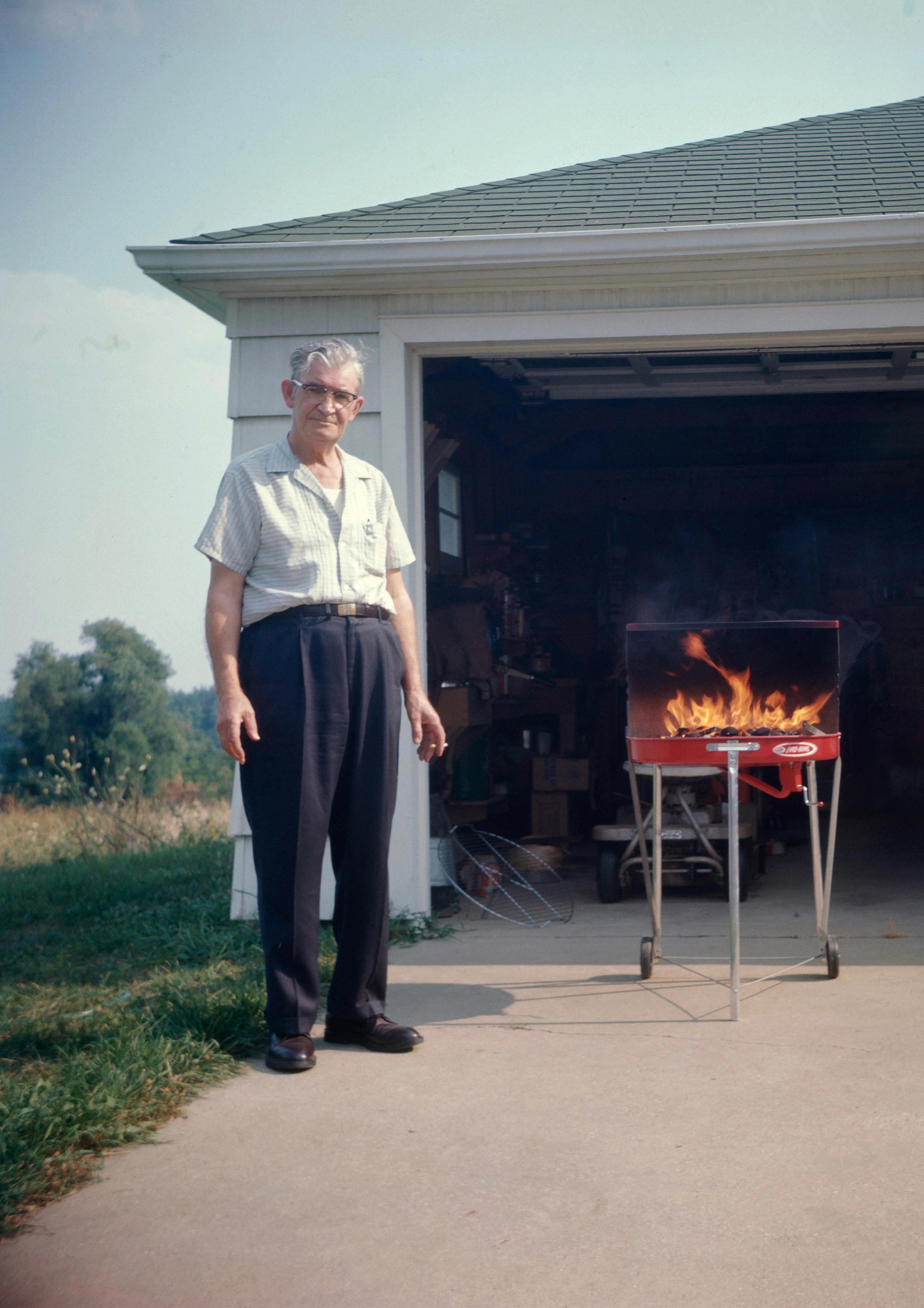
Lee Shulman’s No Place Like Home revives thousands of forgotten 1950s slides by transforming them into an immersive domestic environment, where once discarded private memories become shared fragments of collective history and the quiet poetry of ordinary life unfolds anew. In reanimating these anonymous lives, Shulman invites viewers to reflect on how the intimate, the forgotten, and the everyday quietly shape our shared cultural memory.
“I look for the moments that make a simple house feel like a home. It’s the comfort, the warmth, the sense of safety that lets me breathe and watch the world unfold from my own window. These images remind me that home isn’t just a place, but a feeling I return to again and again, a place where I feel held, free, and undeniably myself. No Place Like Home.“
ABOUT THE ARTIST
A multiple award-winning film director and artist, Lee Shulman (born in London, UK, 1973 – based in Paris, France) founded The Anonymous Project in 2017, shortly after buying his first box of anonymous Kodachrome slides online and falling in love with the people and stories frozen in these tiny windows into the past. Now comprised of nearly one million images, The Anonymous Project has grown into one of the largest collections of amateur photography slides worldwide, spanning from the 1940s to the early 2000s.
Through curation and photographic transformation, Shulman reanimates these personal photographs, weaving them into compelling narratives that explore memory, family, love, and cultural shifts across generations. His work takes many forms that reimagine the original slide, from Cibachrome prints and lightboxes to immersive installations and digital interventions.
This narrative impulse is at the core of Shulman’s work, inviting viewers to piece together their own stories from the images he assembles. His expertise in film informs his cinematic approach, with his photographs often reading as single frames from an unseen film. By placing vintage snapshots in a contemporary context, he invites reflection on our shared visual history and its resonance today. In an era where photographs are increasingly created and consumed digitally, his sculptural works — such as jewel boxes containing unique vintage slides — underscore the enduring connection between photography, memory, and materiality.
Collaboration is integral to his approach, and he has instigated many hybrid works with artists such as Omar Victor Diop and Martin Parr to expand the project’s dialogue. His work with Omar Victor Diop, for instance, sees him inserting Diop into family photos to create a new narrative in what was a racially segregated period in the USA.